

Home › Programmes › The Doha Model
Featured innovation
The Doha Model: Turning Rainwater into Rural Resilience
A simple, community-rooted water conservation innovation developed by Dilasa Sanstha to capture rainwater, reduce evaporation and strengthen groundwater recharge.
The story
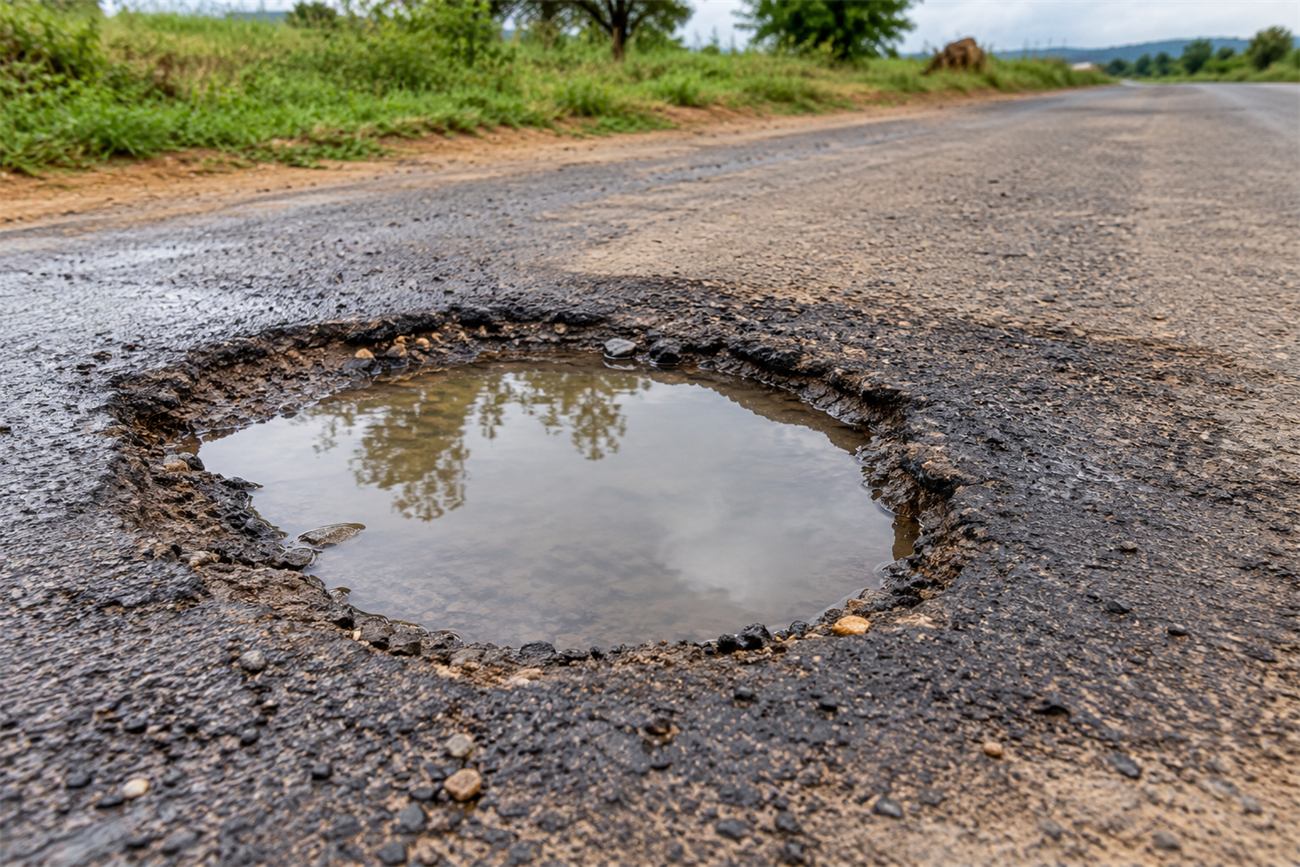
One pothole, one question
Shri Madhukar Dhas — Dilasa’s founder — was travelling from village to village, as he did constantly in the organisation’s early years, when he noticed something simple: a pothole in the road was still holding water after the rain, while the ground all around it had already dried out and the runoff was gone.
That one observation turned into a question — if a pothole could trap and hold rainwater by accident, could a similar depression be created on purpose, somewhere it would actually do some good, like along a dry streambed, and get the same effect deliberately?
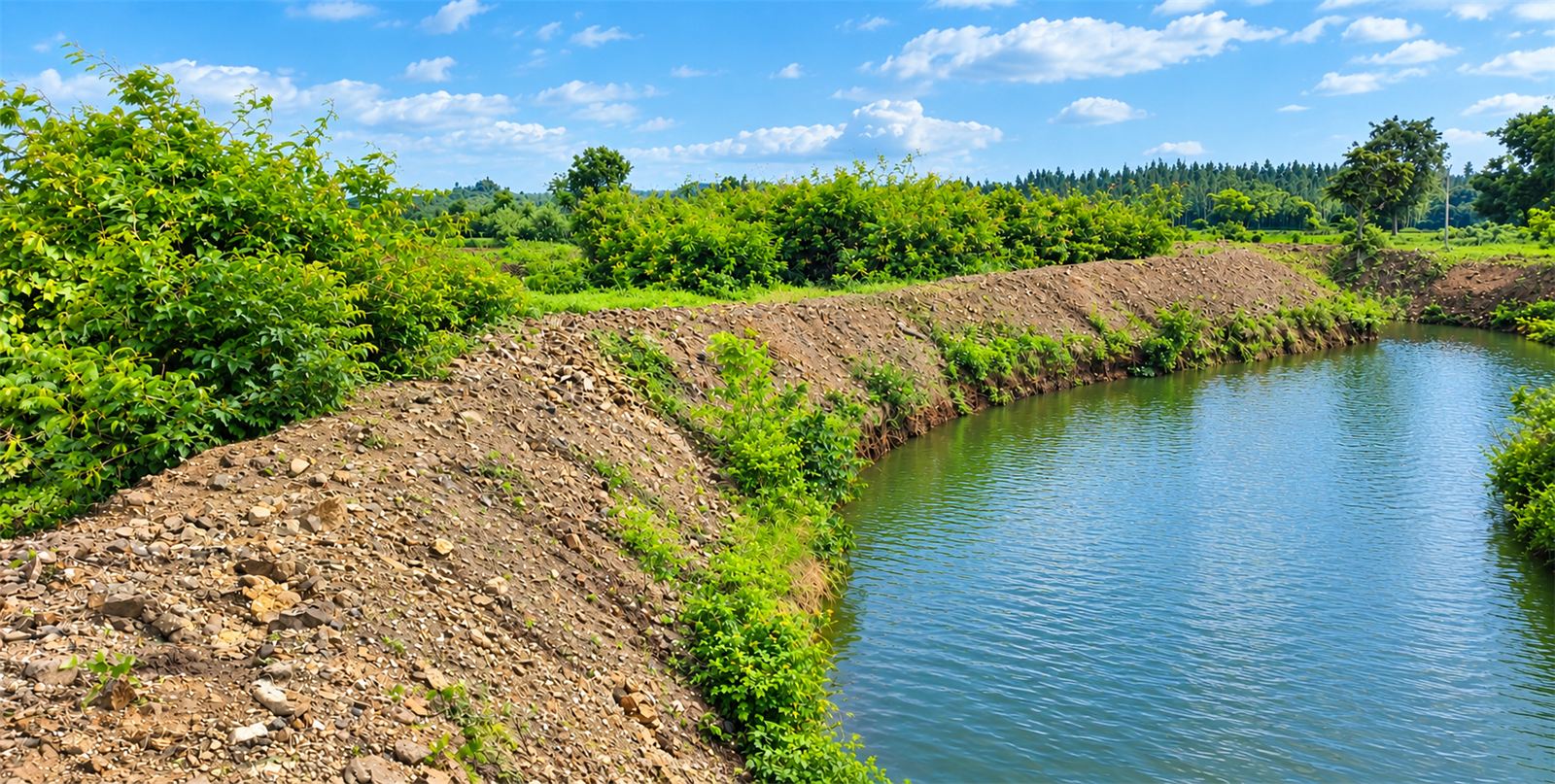
That question became the Doha concept. The name itself comes from Marathi, where “doha” refers to stored or retained water, so the structure is literally named after what it does. From a single roadside observation, Dilasa developed and scaled the idea into the saucer-shaped excavations, built in sequence along seasonal streams, that now define the Doha Model across its working villages.
What is the Doha Model?
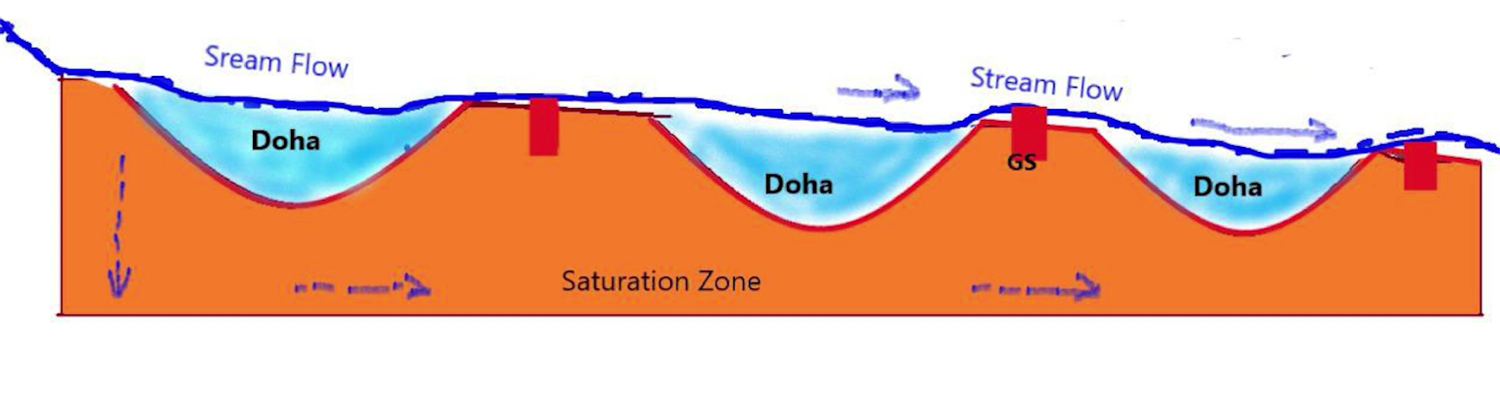
Saucer-shaped excavations, built in sequence
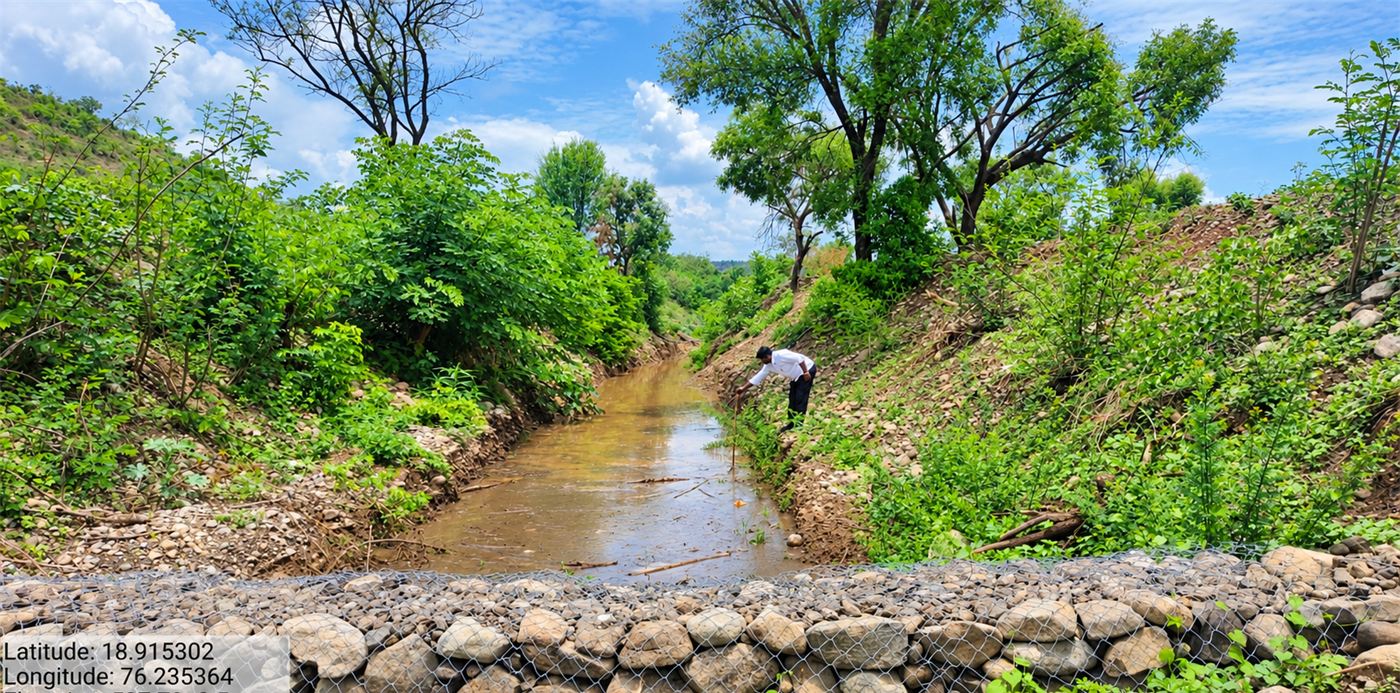
The Doha Model uses saucer or bowl-shaped excavations created along seasonal stream courses. Multiple Dohas are developed in sequence along the same stream, with natural earthen bunds retained between each one. Rainwater is captured and held in place rather than running off quickly, which reduces evaporation loss and gives the water time to percolate down and recharge groundwater.
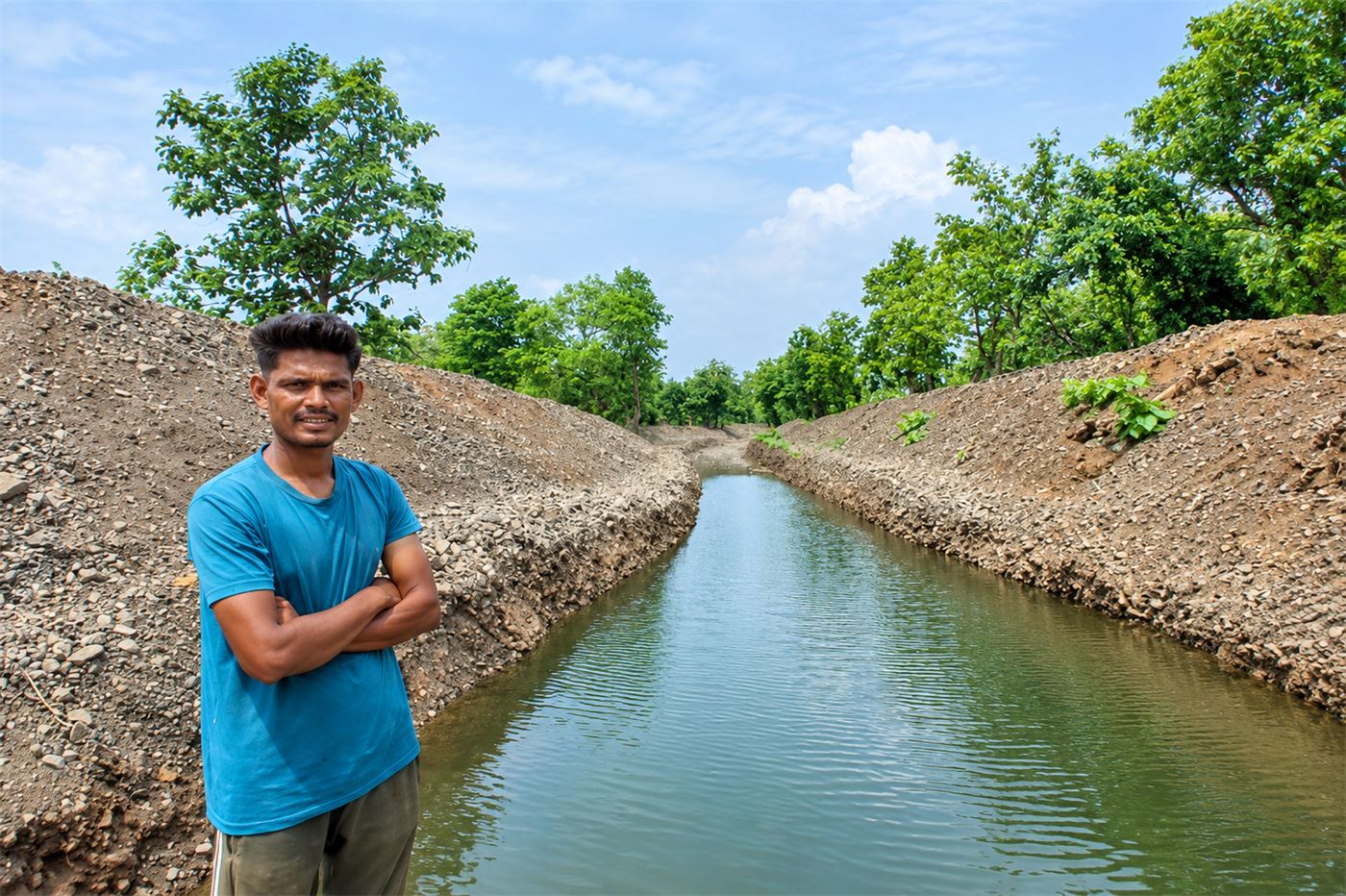
Doha Model impact
What the Doha Model has delivered
2,800+
Doha structures built across Maharashtra
500+ km
of seasonal streams treated
30,000+
acres covered
4,400+ crore
litres of water percolated per year
300+
villages made tanker-free as a direct result
See it explained
Watch the Doha Model
Other water & land solutions
The Doha Model works alongside other structures
Quick answers
Frequently asked questions
What is the Doha Model?
The Doha Model is Dilasa Sanstha’s water conservation approach using saucer-shaped excavations along seasonal streams to retain rainwater and support groundwater recharge.
How many Doha structures has Dilasa built?
Dilasa has built 2,800+ Doha structures across Maharashtra.
How much stream length has been treated through the Doha Model?
More than 500 km of seasonal streams have been treated through the Doha Model.
Help build the next Doha
₹10,000 contributes to a water conservation structure. Every donation is eligible for 80G tax benefit.
Fund Doha structures through your CSR
Water conservation is a Schedule VII focus area. We provide a costed proposal, a named cluster of villages and a reporting schedule.